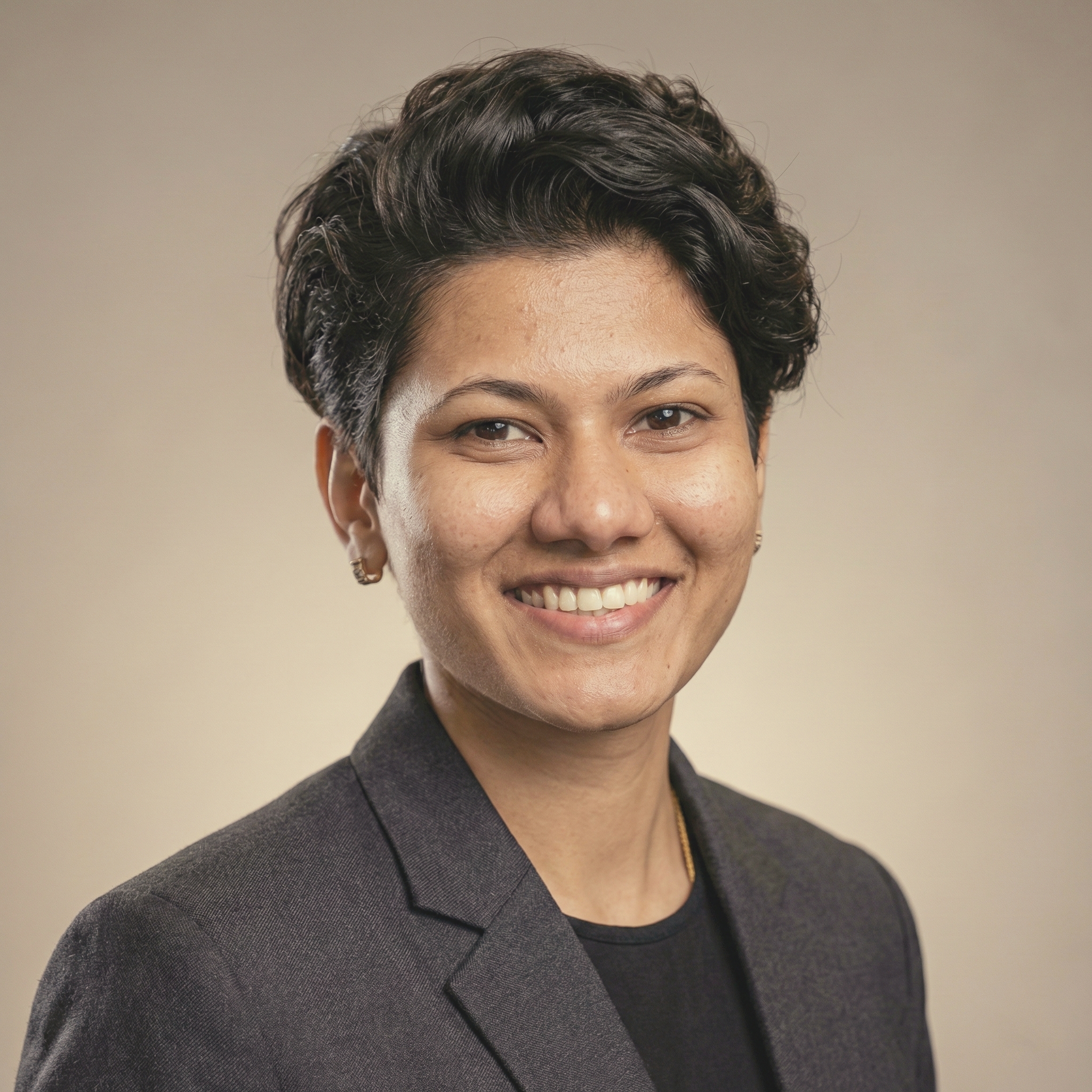
Viswa S. Sekar
AI governance nerd turned rehumanisation obsessive. Who's behind NeoHumxn.io?I design how AI and humans work together, and what that actually adds up to.
I'm Viswa S. Sekar, an AI and data governance practitioner with roots in human-computer interaction, VR/AR and human-robot interaction. For almost a decade, I've been in the rooms where "we need AI" has to turn into operating models, roles, guardrails and trade-offs.
NeoHumxn.io is where I stop writing only for steering committees and make that thinking public: as lenses, operating models and questions about the kind of society we're quietly rehearsing through automation.
Two lives that ended up asking the same question from opposite ends.
My early work was in human-computer interaction and human-robot interaction: building and studying VR and AR interfaces, asking how technology can blend with human movement and perception instead of fighting it. I cared about attention, embodiment and how people actually feel inside systems.
My later work was in enterprise consulting: designing data and AI governance, building Chief Data Offices, and helping senior leaders decide where AI should sit. Years inside large European corporates, watching how platform decisions ripple all the way down into someone's Tuesday afternoon.
That combination, embodied interaction on one side and organisational design on the other, is what shapes my lens. NeoHumxn.io is those two lives stitched together:
how systems run, and how they land in real human bodies and communities.
A decade of watching the gap between what leadership decides and what people actually live with.
I have spent almost a decade designing and delivering AI and data governance strategies for global enterprises. Working at the highest levels of corporate leadership highlighted a fundamental shift in systems architecture: we have successfully optimised our models for execution and scale.
The resulting complexity has outpaced our tools for human sensemaking.
Identifying this structural gap was the genesis of NeoHumxn. I now focus on developing Orientational Intelligence (OI): architecting the frameworks that ensure human agency scales alongside technical capability.
Three different doors into the same underlying question.
You deploy AI at scale
You want the diagnostic language for what your programmes are actually building. A map that names the direction your deployments already point, before it hardens into infrastructure.
Your team shifted and nobody said why
Roles blurred, authority moved, the memo never arrived. That is not a communication failure. It is a structural one. It has a name: an OI gap at organisational scale.
You are in the middle of something
Health. Visa. Housing. Work. Five situations at once, none with a clear map of where you stand. Orientational Intelligence was built for exactly this. No boardroom required.
Two places to go next, and a standing invitation.
Start with The Framework and Start Here, especially the Orientational Intelligence lens and the Automation-First vs Rehumanised operating models. And if you are building something and want a sparring partner on AI, governance or world-models, reach out.